

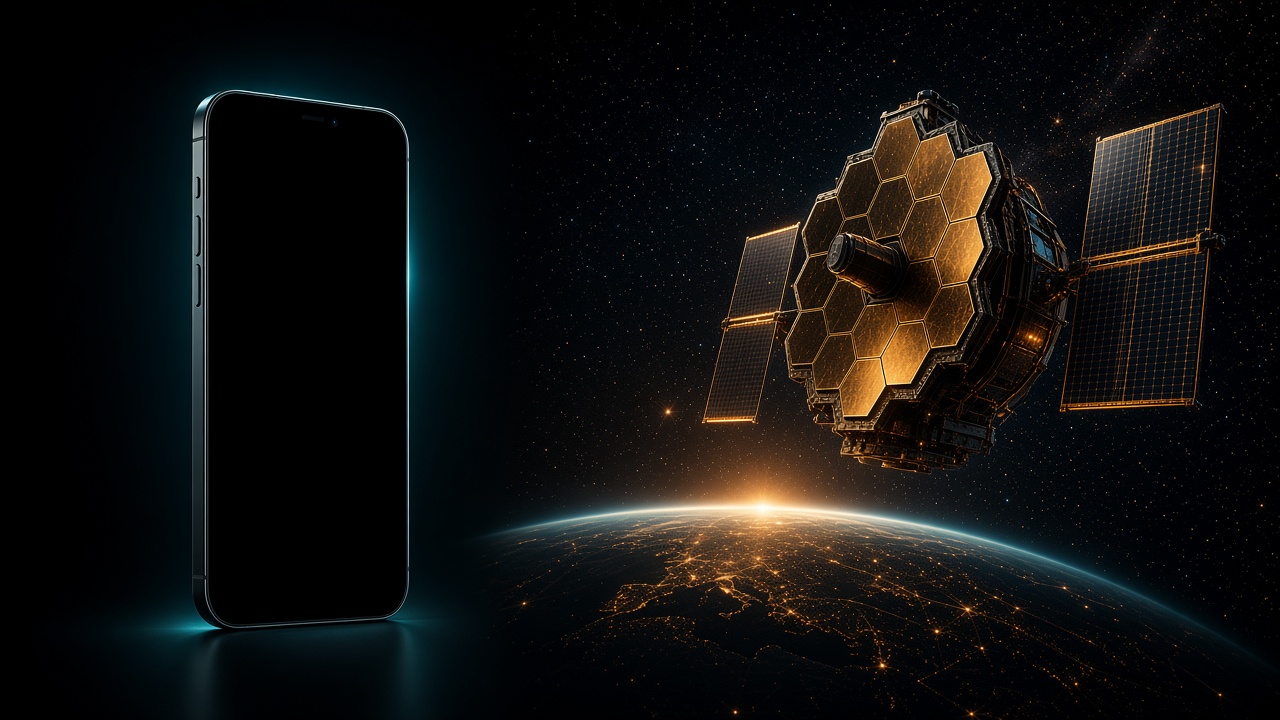
August 2026 put intelligence in two very different places: in a phone you hold, and in instruments that never come back to the ground.
Google used the month to push on-device AI into the Pixel 11 line and to cut the cost of a workhorse model. NASA and Rocket Lab used it to move a telescope and a launch system that do not need a traditional pad.
Both matter to teams who build products. One changes what a handset can do without a round trip to the cloud. The other changes who can put hardware in orbit, and who will have to process the data when it comes down.
Pixel 11, designed around Gemini
At its Made by Google event, Google unveiled the Pixel 11 series: Pixel 11, 11 Pro and Pro XL, and a foldable 11 Pro Fold. The phones run on the new Tensor G6 chip and are designed for what Google calls Gemini Intelligence. Camera and battery are the hardware headlines. The software headline is on-device AI, with Gemini Nano handling personal assistance on the phone itself.
For people using the devices, that means more of the useful work happens locally: real-time translation, camera-based search, and assistance that does not wait on a network. For teams shipping mobile products, it is another flagship surface where the model is a feature of the hardware, not a tab you open in a browser.
Prices stay in the competitive premium band rather than a new luxury tier. The strategic point is distribution. When the assistant lives on the device, the experience has to be designed for that chip, that camera, and an offline path.
Gemini 3.7 Flash, and a year of access for students
Google also released Gemini 3.7 Flash for developers. It is aimed at routine coding and knowledge work, with lower latency and API pricing about 50 percent cheaper per token. The same logic as July's Flash models, applied to the everyday tier: make the default call inexpensive enough that a startup can use it as infrastructure.
Google paired the release with a year of free Gemini access for students. That is a distribution move into education, and it matters in markets where a classroom or a young studio cannot absorb a commercial token bill. The model still has to be wrapped in a product. The year of access simply removes the first excuse not to try.
Roman leaves Earth eight months early
On 30 August 2026, NASA launched the Nancy Grace Roman Space Telescope on a SpaceX Falcon Heavy. The observatory, named for NASA's first Chief of Astronomy, is built to survey the sky for dark energy and exoplanets. The launch came eight months ahead of schedule, which is its own comment on how launch infrastructure has matured.
The science is the mission. The industry consequence is the data. A survey telescope of this class produces archives that only make sense with serious compute: storage, pipelines, and models that can search what no analyst can scan by eye. That is a direct opening for cloud and data platforms, and for AI teams who already know how to turn a large corpus into a query a researcher can trust.
GHOST, a launch system in a container
On 10 August, Rocket Lab unveiled GHOST, Global Hypersonic and Orbital Spaceport Technology. It is a launch system packaged in shipping containers, so it can be set down where a fixed pad does not exist and fly with comparatively little site work. The intended use is responsive launch: satellites, defense, and science missions that cannot wait for a slot at a traditional range.
If that model holds, orbital access stops being a property of a few coastlines. A government, and in time a company, can think about launch as a deployable capability. South Asian space programs, including Pakistani and Indian satellite work, already sit inside this shift. The interesting question is no longer only who can build a satellite. It is who can get it up, and who can run the ground systems when the downlink starts.
What August asks of a product team
On the ground, design for on-device Gemini where the phone can carry the task, and for a cheaper Flash API where the work is repetitive. In orbit, assume the next wave of scientific and commercial data will need the same discipline as any other large system: pipelines, access control, and models that explain their answers.
Archwares builds on both sides of that line. AI products that respect the device they run on, and platforms that can hold the data those devices, and those telescopes, send back.
Related reading
Contact Archwares today at contact@archwares.com or visit www.archwares.com if your next release depends on on-device AI or on data too large to treat as a side project.