

July 2026 was a month about throughput and trust. Google made agent workloads cheaper to run, and it put a new reasoning model in front of robots. In the same month, synthetic media showed how quickly a convincing picture can outrun the truth.
Those two stories belong together. The models are ready for production. The content around them is not automatically ready for an audience.
At Archwares, we treat a release like this as an operating question, not a headline. What can a team actually ship, at what cost, and what has to be checked before it reaches a customer?
Gemini Flash, built for agents that have to stay on
Google introduced three Gemini models aimed at agentic work: Gemini 3.6 Flash, 3.5 Flash-Lite, and 3.5 Flash Cyber. They are tuned for high efficiency and low latency. They give up a measure of raw power so inference costs about half of what the previous generation required.
That trade is the point. Assistants, support bots, and code or analysis agents do not win on a single spectacular answer. They win when they can run all day. A model that is slightly less maximal, and much cheaper, is the one a product team can leave in the path of real traffic.
Google positioned the new pricing for production jobs: code generation, data analysis, and customer support. For startups and enterprises, including software firms across Pakistan and South Asia, that is the difference between a pilot and a service. Generative AI only becomes a product when the token bill can survive a normal month.
What to change in an architecture
Cheaper Flash models are a routing decision. Keep a stronger model for the few steps that need it. Send the repetitive steps, classification, extraction, first-draft support, routine code, to the cheaper tier. The product feels the same. The margin does not.
Robotics ER2, from a prompt to a physical task
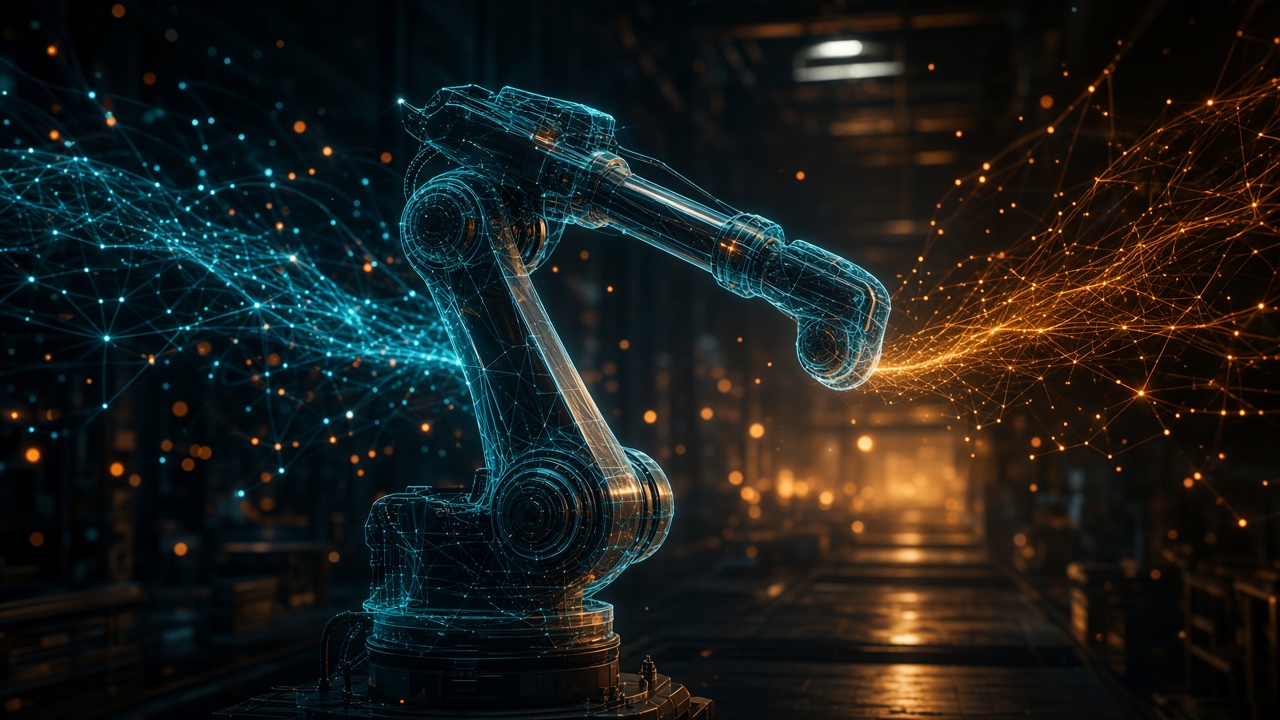
Alongside the language models, Google launched Gemini Robotics ER2, an embodied-reasoning model that connects digital AI to the physical world. ER2 is built so a robot can talk with people, interpret its surroundings, and work through complex, multi-step tasks.
The practical picture is a warehouse robot that can take a spoken instruction and move through obstacles, using multimodal reasoning rather than a fixed script. The same pattern applies anywhere a machine has to hear a person and then act: picking and packing, assisted care, and parts of agriculture and manufacturing.
This is still systems work. Language is one input. Perception, safety stops, and the physical layout are the rest. Teams that already build custom software around devices will recognize the shape: the model is the interpreter, and the product is the loop around it.
When a generated scene becomes a false record
The other July story moved in the opposite direction. Google briefly tested a generative feature in Google Earth that could create custom satellite scenes. It was withdrawn after one day. People used it to produce realistic images of disasters that never happened, including a city that appeared to be on fire. Google disabled the tool immediately.
A satellite view carries authority. If the picture can be invented, the authority is borrowed. That is the risk of synthetic media when the frame looks like evidence.
Snapchat made a related call on its own surface. It said it would ban wholly AI-generated videos from Spotlight, describing the goal as stopping low-effort synthetic filler and keeping the feed authentic. Platforms are starting to decide that "made entirely by a model" is a distribution problem, not only a creative one.
What content teams should do now
Verification is becoming part of publishing, not a side policy. Watermark and detection tools, including Google's SynthID, and the rules of each platform, now sit next to the brief. If a campaign, a news image, or a product visual could be mistaken for a record of a real event, it needs a provenance story before it ships.
In markets where trust in information is already fragile, that bar is higher. Media literacy matters, and so does the engineering: security and content integrity belong in the same review as the model choice. Generate where it helps. Label it. Do not let a synthetic scene wear the clothes of a document.
The July lesson
The new Gemini models make agents affordable enough to run as infrastructure. Robotics ER2 extends that intelligence into places where a mistake is physical. The Google Earth withdrawal, and Snapchat's Spotlight rule, are the constraint on the other side: capability without a check on authenticity does not stay up for long.
Archwares designs that combination on purpose. Faster models in the workflow. Clear limits on what those models are allowed to present as real.
Related reading
Contact Archwares today at contact@archwares.com or visit www.archwares.com to plan an agent stack that is cheap enough to run and careful enough to publish.